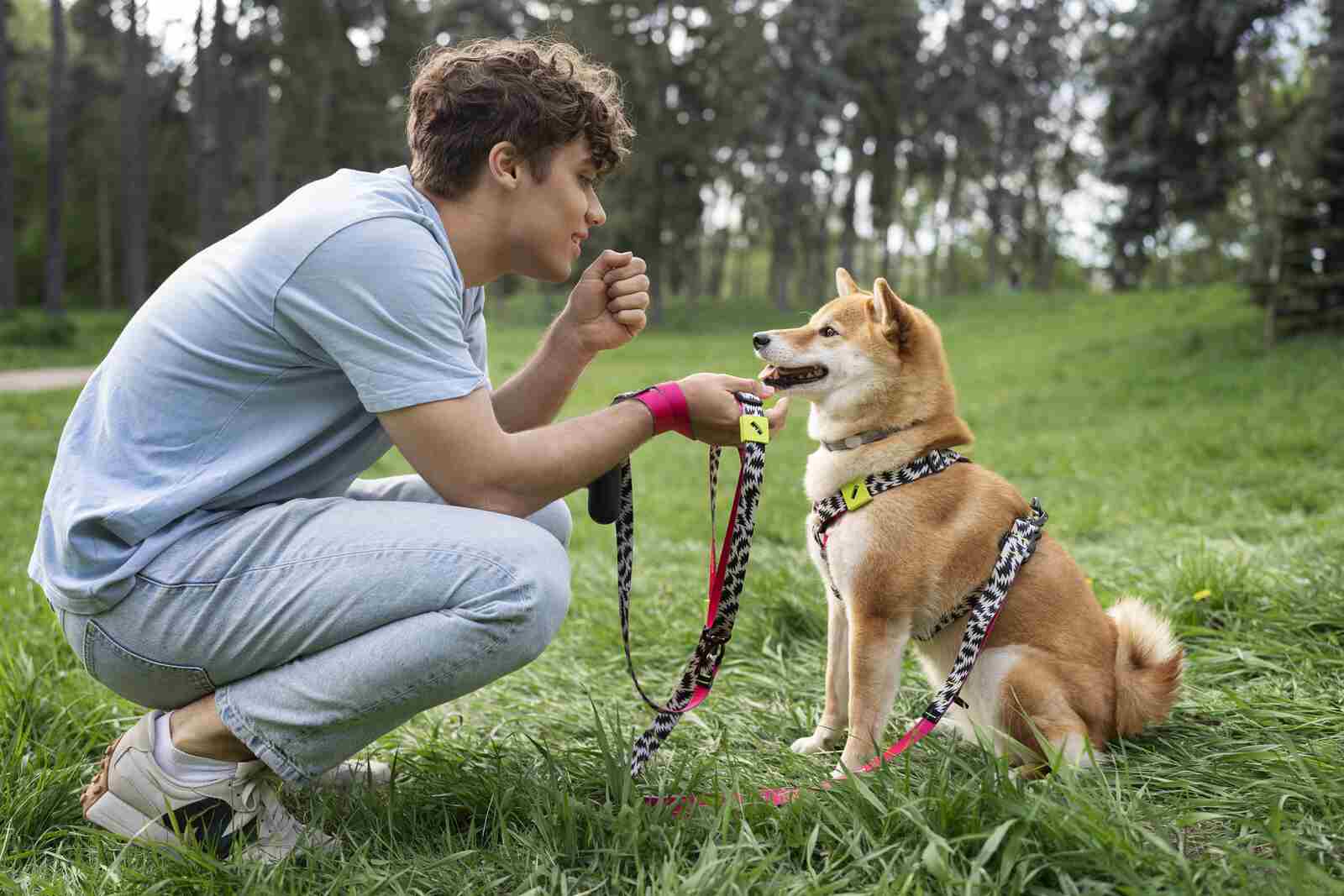
Leash Training for Dogs – A Practical Guide for Better Control & Behavior
Dog walking is simply one component of leash training; the rest include ensuring that your dog is safe, disciplined, and in harmony with you. Walking your dog is enjoyable and less stressful when you train your dog to walk behind you and refrain from dragging, lunging, and getting distracted.
Importance of Leash Training
A dog’s behavior in general and its safety depend on how well the dog is trained to use a leash. A well-trained dog on a leash:
obedience training will be more efficient
helps prevent sudden reactions like fright and aggression
protect oneself from danger in crowded and noisy environments
enhances manners
Without proper training, a dog can be difficult to manage outdoors.
Training Dogs with the Use of a Leash
Although it is ideal for puppies aged 8 to 12 weeks to start training, it is also possible to train mature dogs. Inculcating the right behavior in dogs becomes easy before bad behavior starts developing.
Step-by-Step Leash Training Process
1. Start Slowly with the Leash
Before using the leash, allow your dog to get accustomed to their collar or harness by letting them move around inside the house without any restrictions.
2. Train in a Quiet Environment
Begin training in a quiet environment, such as your house. This will prevent any outside disturbances that may distract your dog from training.
3. Utilize Positive Reinforcement Training
Reward your dog with petting, treats, or positive words when they walk alongside you without tugging. This will reinforce good behavior.
4. Pause when the Dog Tugs
If your dog starts tugging the leash, pause walking until they release it. You can start moving only once the leash is relaxed. They will come to know that tugging will not get them anywhere.
5. Repeat Simple Commands
Use simple commands such as "heel" or "let's go" repeatedly.
Common Leash Training Mistakes to Avoid
- The possibility of creating fear and hostility is inherent in making harsh corrections.
- Inconsistent training: Your pet gets mixed signals
- Overlooking reinforcement: Why rewards are key to good training
Pulling back on the leash will increase your dog’s resistance.
- Leash Training Tips for More Effective Results
- Short and often are good ways to train
- To have more control over your pet, buy him a soft harness
- Training should happen daily and in different locations
- While training, stay calm and patient
Pet heart fits team, help is beneficial to get faster results in dog training and solve some problems.
Benefits of Proper Leash Training
Increased levels of obedience and discipline: It ensures that your dog listens to your commands and acts accordingly.
Ensures safer outdoor experiences: Your dog will not run away suddenly or have accidents while on walks.
Establishes stronger relationship: It helps in strengthening the relationship between you and your dog.
Ensures stress-free walks: Walking will be easier and more enjoyable.
Conclusion
Training your dog on the leash is very important for every owner to focus on. With the right techniques, patience, and perseverance, your dog will learn to walk comfortably at your back. Taking the time to train your dog on the leash will ensure you end up with a happier and well-behaved pet.
Frequently Asked Questions on Dog Leash Training
1. At what age should the dog be trained for leash usage?
Despite being an older dog, he may learn leash training provided patience and consistency; however, puppies could be taught starting from ages 8-10 weeks old.
2. How long will it take my dog to train his leash?
This depends upon various factors, including breed, age, and temperament. Most of the time, the dog would make progress within 2 to 6 weeks of daily exercise.
3. Which type of collar and leash would be appropriate?
Retractable leashes often induce the dog to pull and are hard to control. A regular leash measuring 4-6 feet is more effective than retractable ones.
4. How can I prevent my dog from tugging on the leash?
Make use of positive reinforcement by stopping when your dog pulls and starting again only when they are walking peacefully next to you. The secret is to be consistent.
5. Can my dog's general behavior be improved by leash training?
Yes, dogs who are taught good leash manners tend to be calmer, more obedient, and easier to handle in social or outdoor situations.

